
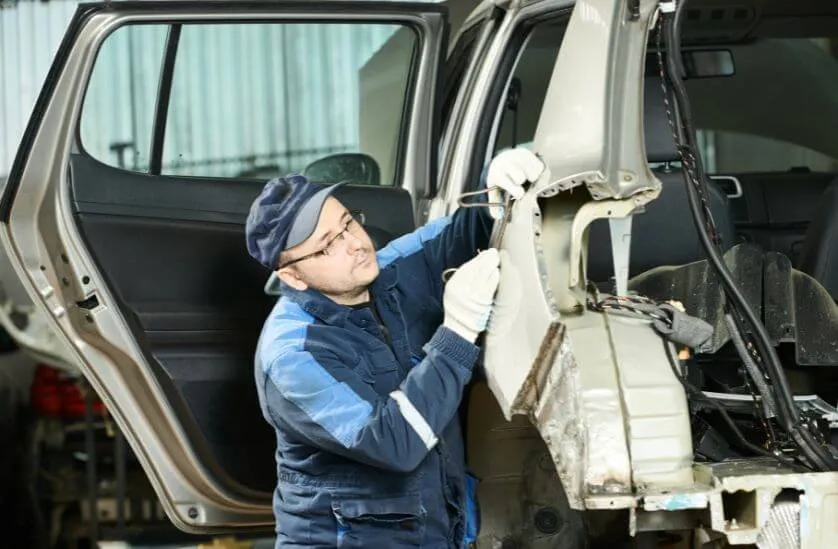
What auto body restoration covers
Auto body restoration is the slow kind of damage. A crash happens in a second, but rust, rot, sun fade and a dozen parking dings take years. Restoration means finding all of it, cutting out what cannot be saved, rebuilding the metal and refinishing the car so it looks and holds up like it should.
New York is hard on bodywork. Winter road salt sits in wheel wells and under the doors, street parking adds a new scrape every month, and summer sun bakes the clear coat on the roof and hood. A car that spends its life outside in the city ages faster than the same car kept in a garage.
A restoration job usually covers some mix of these:
- Rust repair. Surface rust sanded back to clean metal, and rotted sections cut out and replaced with new steel.
- Rocker panels and wheel arches. The low parts of the car where salt and water sit longest, and where rot usually starts.
- Old dents and creases. Damage that was never fixed after an old bump, pulled and smoothed or replaced.
- Paint. Faded, peeling or cracked paint stripped, primed and resprayed, with the color matched to the rest of the car.
- Trim, seals and details. Rubber seals, moldings, emblems and lights that have cracked or yellowed with age.
Signs a car needs restoring, not just a touch up
Small problems on old paint spread faster than most people expect. These are the signs it is time for more than a spray can.
Bubbles under the paint
A blister in the paint near a wheel arch or door edge is usually rust working underneath. The visible bubble is the small part.
Holes in the rockers or floor
If a finger or a screwdriver goes through metal under the doors or in the trunk floor, the rot needs cutting out, not covering.
Orange streaks or flaking
Rust stains running from seams, door bottoms or the trunk lid mean water has been getting in for a while.
Clear coat peeling off
Paint that looks chalky, patchy or is shedding in sheets has lost its protection, and bare metal is next.
Doors that drop or rattle
Rust around hinges and door frames can let a door sag. It is a structural warning, not only a cosmetic one.
Water in the trunk or footwells
Damp carpet or standing water often comes from rusted seams or seals that have dried out and cracked.
Why rust has to come out, not be covered up
The quickest way to make rust look gone is to fill it and paint it. It also guarantees it comes back. Rust spreads under paint, so the bubble you can see is usually sitting on a wider patch you cannot. Filler laid over it traps moisture, and within a season or two the new paint lifts.
A proper restoration works the other way round. The paint is taken back until clean metal shows on every side of the damage. Light rust is sanded and treated. Metal that has thinned or rotted through is cut out and replaced with a new section, welded in and sealed. Only then does primer go on. It takes longer, and it is the difference between a repair that lasts and one that needs doing again.
How a restoration job runs
Every car is different, but most restorations follow the same route from the first look to the drive home.
Look over
The whole body is checked, including the rockers, wheel arches, floor and the places rust likes to hide.
Estimate
You get a free estimate before any work starts, with what can be saved and what has to be replaced.
Strip
Damaged paint, filler and trim come off so the real extent of the damage is in plain view.
Metal work
Rust is removed, rotted sections are cut out and new metal goes in, then dents and creases are straightened.
Refinish
Primer, color and clear coat, with the paint tinted and blended to match the rest of the car.
Pickup
Trim and seals go back on, and you drive away in a car that looks cared for again.
Restoring a daily driver versus a car you love
Not every restoration has the same goal. On a daily driver the aim is usually to stop the rust, fix the worst of the damage and make the car look tidy and stay solid for years more. On a car with sentimental value or an older model you want to keep, the aim may be closer to how it looked when new, panel by panel.
Both are fair goals, and they lead to very different estimates. Tell us which one you have in mind before the work is planned. A good shop explains what each choice involves, where the money goes, and where it makes sense to stop. Paint matching matters on either kind of job, because a restored panel that does not match the rest of the car undoes the point of the work.
Old damage is yours to plan. New damage can go on a claim.
Rust and wear are rarely covered by insurance. But if a crash, a falling branch or a storm added fresh damage, that part can go through your policy. We sort out which is which and handle the claim side for you.
Free estimate first
You see what is being restored, and why, before any work starts.
Claims handled
When part of the damage is covered, we work with your insurance company and handle the claim.
Your choice of shop
You can pick your own shop, whatever the insurance list says.
Restoration rarely stops at the metal.Paint and structure, in one shop.
Once the rust is out, the car still needs paint that matches and a body that sits straight. These services often go with a restoration.
Auto body restoration across New York City
We take restoration work from all five boroughs, Westchester and Long Island. The shop is in Forest Hills, so for Queens drivers it is close to home. If the car also has fresh damage from a crash, our collision repair page explains how that side works, and the insurance claims page covers how covered damage gets paid for. To get a free estimate, call or send us the details, and see what other drivers have said on our reviews page.
Restoration often pulls in other work. Rust near the rails or a sagging structure can mean frame repair, a full respray falls under car painting and refinishing, and owners who want a new look go for a custom paint job. Drivers from Long Island, where cars spend every winter on salted roads, can bring a restoration project to the same shop.
Read up first.Then call.
Plain answers to the questions drivers ask before and after a repair: what it involves, who pays, and what to check.
Auto body restoration questions
What is the difference between restoration and collision repair?
Collision repair puts a car back the way it was before one crash. Restoration deals with damage that built up over time: rust, rot, old dents, faded or failing paint and tired trim. Many cars need a bit of both. Our collision repair page covers the crash side.
Can rust really be fixed, or does it just come back?
Surface rust can be sanded back to clean metal, primed and painted. Rust that has eaten through the metal has to be cut out and replaced with new steel, then sealed. Painting over rust without removing it is what makes it come back, which is why a proper restoration starts by finding where the rust ends.
Will insurance pay for restoration work?
Usually not for rust or wear, because most policies treat that as age, not an accident. If the car was damaged in a covered event, such as a crash, a falling branch or a storm, that part of the repair can go through a claim, and we work with your insurance company and handle it. See our insurance claims page for how that works.
Is my car worth restoring?
It depends on how far the rust has spread, how much the car means to you and what it would cost to replace. The honest way to decide is a free estimate: we look it over and tell you what we find before any work starts.
Do you restore older and classic cars, or only daily drivers?
Both get the same approach: find the damage, remove it, rebuild the metal and refinish the paint. Call 646-347-5520 and tell us what car it is and what shape it is in.
How do I get started?
Call 646-347-5520, any time, day or night, or send us the details. Photos of the worst spots help.
Rust spreading? Call for a free estimate.
646-347-5520Open 24 hours.
Get a Free Estimate