
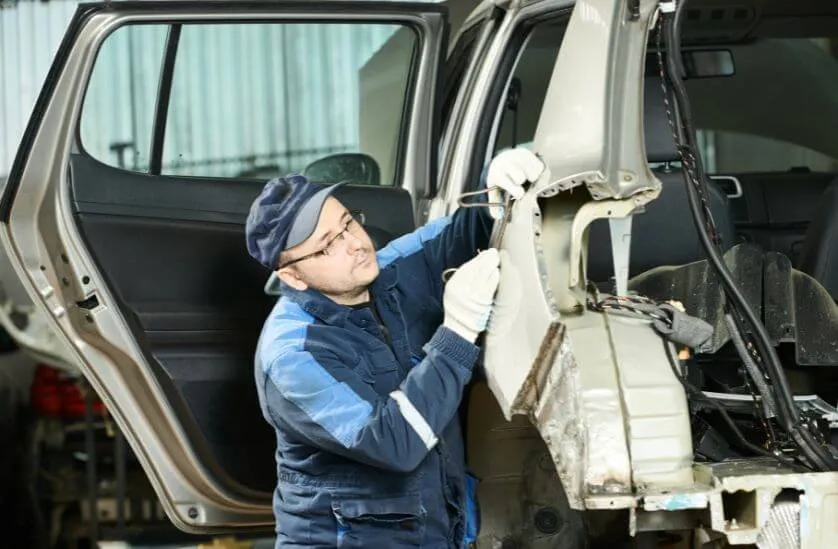
An older car rarely fails all at once. The paint dulls, a bubble appears over a wheel arch, a door starts to sound different when it shuts, and one day the question is whether the car is worth saving. This guide is for owners at that point. It explains how a car body ages, what each kind of damage means, how a restoration is planned and what decides the cost, so you can talk to any shop knowing what to ask. It is written with New York streets and winters in mind, but most of it holds anywhere.
Repair, refresh or full restoration: three different jobs
People use "restoration" for very different amounts of work, and mixing them up is the fastest way to get confused by an estimate.
- A repair fixes one problem: a rusted wheel arch, a dented quarter panel, a cracked bumper. The rest of the car is left as it is.
- A refresh tackles the whole body to a sensible standard. The rust is cut out, the worst dents are fixed, and the tired paint is redone so the car looks cared for and stays solid for years more.
- A full restoration aims to bring the car back close to how it left the factory. Panels come off, trim is renewed, and the body is taken back to bare metal in places. On classic cars it can mean the whole shell.
Each step up multiplies the hours. That is why the average cost of a full car restoration is such a hard question to answer with a single figure: the word covers everything from a single panel touch up to a car rebuilt panel by panel. Decide which of the three you actually want before you ask anyone for a number.
How New York ages a car body
A car kept in a dry garage and driven on summer weekends ages slowly. A car parked on a city street through every winter ages fast, and the reasons are predictable.
Road salt is the big one. Salt mixed with slush gets thrown into wheel wells, sprayed along the rocker panels and packed into seams under the car. Salty water keeps steel wet long after the road dries, and wet steel rusts. Blocked drain holes make it worse. Doors, rockers and the trunk channel all have small holes that let water out. When leaves and grit block them, water sits inside the panel and rots it from the inside out, where you cannot see it.
Sun and heat attack the paint rather than the metal. The roof, hood and trunk lid take the most sun, so they fade and lose their clear coat first. Street parking adds a steady supply of scrapes, door dings and bumper taps. None of them matters much alone, but every chip that reaches bare metal is a place rust can start.
Reading the rust: surface, scale and rot
Rust is not one condition. It moves through stages, and the stage decides the repair.
- Surface rust. Light orange spotting on top of the metal, often around a stone chip or a scratch. The steel underneath is still sound. It can be sanded back to clean metal, treated, primed and painted.
- Scale. The rust has started to flake and pit the surface. The metal is thinner than it was. It can often still be ground back and saved, but it takes more work and the area grows once the paint comes off.
- Rot. The rust has eaten through. There is a hole, or the metal crumbles when pressed. Rotted steel cannot be saved. It has to be cut out and a new section welded in.
The rule that catches most owners out is that rust is always bigger than it looks. A bubble in the paint is the top of a patch that has spread underneath. That is why an honest estimate sometimes comes with a warning that the area may grow once the paint is stripped back.
Where to look before anyone gives you a number
Ten minutes with a flashlight tells you a lot about how far the rust has gone. Check these spots and take photos.
Door bottoms and drain holes
Open each door and look along the bottom edge. Blocked drains and bubbling paint here mean water has been sitting inside.
Rocker panels and pinch welds
The seam under the doors where the car is jacked up. Crusty or swollen metal here is common and often worse than it looks.
Rear wheel arch lips
The inside edge of the rear arches traps salty slush. Feel behind the lip for flaking metal.
Trunk floor and spare wheel well
Lift the mat. Damp carpet, rust stains or soft spots point to failed seals or seams.
Around the windshield and rear glass
Bubbles at the corners of the glass mean water is getting under the seal and into the frame of the opening.
Underneath, near the mounts
Look at where the suspension and subframe bolt to the body. Rust at mounting points is a structural concern, not a cosmetic one.
If the rust reaches the structure, such as the rails, subframe mounts or the floor where seats are bolted, the job stops being only cosmetic. That kind of damage is assessed the way frame repair is, because it affects how the car holds together.
Old paint: fade, oxidation and clear coat failure
Paint ages in a sequence too. First it loses gloss. Then it oxidizes and turns chalky, so a wipe of the finger comes away colored. On most modern cars, the paint has a separate clear coat on top, and the last stage is that clear layer cracking and peeling away in patches, leaving the color underneath dull and exposed.
The first two stages can often be brought back with careful cleaning, polishing and protection, because there is still healthy paint to work with. Once the clear coat has peeled, polishing cannot rebuild it, and the panel needs refinishing. How to restore 20 year old car paint walks through how to tell which stage you have and what can be done at home before it becomes a respray. When it does, that work falls under car painting and refinishing.
Is it worth restoring? Weighing the car against the work
This is the question most owners are really asking, and there is no formula that answers it for you. The useful way to think about it is to put three things side by side:
- What the work involves. How much rust, where it is, and whether the paint can be saved or must be redone.
- What the car is worth to you. Its market value, but also whether it is paid off, whether it runs well, and whether it means something to you.
- What replacing it would take. A replacement car has its own price, taxes, insurance and unknown history.
People often reach for rules of thumb here. The best known is the $3000 rule for car repairs, which is a rough way of deciding when a repair bill is a sign to move on. It is a starting point for the conversation, not an answer, and it was built for mechanical breakdowns more than for bodywork, which is why it helps to understand where it falls short.
A car with a healthy engine and gearbox and rust only in the outer panels is often a good candidate. A car with rot spreading into its structure and mechanical problems on top is a harder case, and a good shop will say so.
What drives the size of a restoration estimate
Restoration is mostly labor. Materials matter, but the hours spent finding, cutting, shaping and finishing metal are what move the number. These are the main factors:
- How far the rust has spread, including the part that only shows once the paint is stripped.
- Whether panels can be repaired or must be replaced, and whether replacement panels are still made for the car.
- How much of the car is painted. One panel blended in, several panels, or the whole car.
- Trim, seals and small parts. Older cars often need rubber seals, clips and moldings that crack when removed.
- The standard you are aiming for. A tidy daily driver and a show finish are different jobs on the same car.
How much it costs to fix bodywork on a car goes through these in more detail, including why prices quoted online tell you little about your car.
The life of a restoration project
Whatever the size of the job, a well planned restoration moves through the same stages. Knowing them helps you see where your car is and why.
Survey
The whole body is inspected, outside, inside and underneath, and the damage is photographed.
Scope
You and the shop agree what the goal is: repair, refresh or full restoration.
Teardown
Trim, seals and damaged paint come off so the real extent of the rust is visible.
Rebuild
Rotted metal is cut out, new steel is welded in, and dents and creases are worked straight.
Seal and paint
Seams are sealed, bare metal is primed, and color and clear coat go on.
Reassembly
Glass, trim, lights and seals go back, and every panel gap and door is checked.
Insurance and restoration: what is usually covered
Most car insurance pays for sudden damage, not gradual wear. Rust, sun fade and paint that has failed with age are treated as the car getting older, so they are almost never covered. If something sudden adds new damage to an old car, such as a crash, a falling branch or a storm, that new damage can usually go through a claim even though the old rust next to it cannot.
That split matters when you plan the work. It can make sense to fix the covered damage and the restoration work at the same time, since the same panels are often involved, as long as the estimate shows clearly which part is which. Our insurance claims page explains how a claim works from the shop's side.
Keeping a restored car solid
Once the rust is out, a few habits keep it from coming back:
- Rinse the underside in winter. Washing off salt after a snowy spell does more for an older car than any wax.
- Keep the drain holes clear. Check door bottoms and rockers after autumn, when leaves fall.
- Fix chips while they are small. A stone chip touched up promptly cannot turn into a rust bubble.
- Protect the paint. Regular washing and a coat of wax or sealant slow down fading on the roof and hood.
- Watch the seals. Cracked rubber around doors and the trunk lets water in where it does the most harm.
One question,one straight answer.
Each of these has its own page with a short answer up top and the detail underneath.
Getting an older car looked at
If you are weighing up an older car, the most useful thing is an honest look at the body before you decide anything. Our auto body restoration page explains how we approach the work, starting with a free estimate before any work starts. The shop is at 99-49 66th Ave in Forest Hills, Queens, and it is open 24 hours. Call or send us the details, with photos of the worst spots if you have them.
Not sure the car is worth saving? Call and ask.
646-347-5520Open 24 hours.
Get a Free Estimate